What Is In-Plant Logistics?
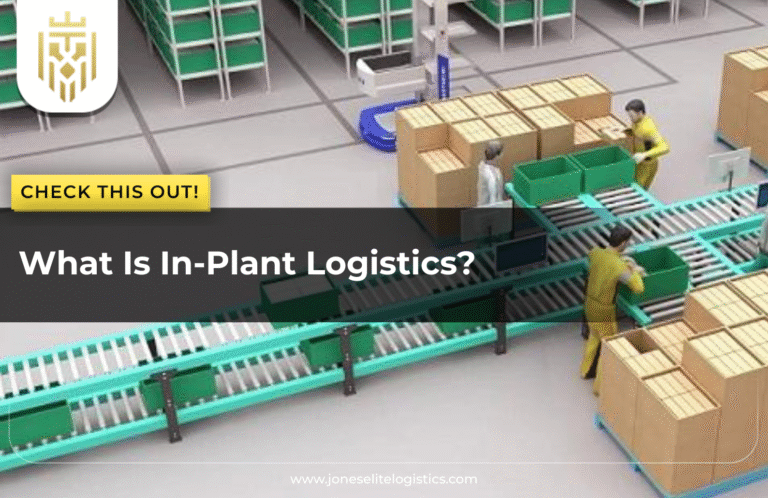
In-plant logistics refers to the systematic management of material flow within a factory or production facility. It includes activities such as material handling, internal transportation, inventory control, and shop floor logistics that support manufacturing operations.
Unlike external logistics, which deals with suppliers and customers, in-plant logistics focuses on internal logistics processes that ensure materials reach the right workstation at the right time. A well-designed in-plant logistics system minimises downtime, reduces waste, and keeps production lines running smoothly.
Effective in-plant logistics management integrates people, processes, equipment, and technology to maintain a continuous and efficient production flow across the shop floor.
Key Components of In-Plant Logistics
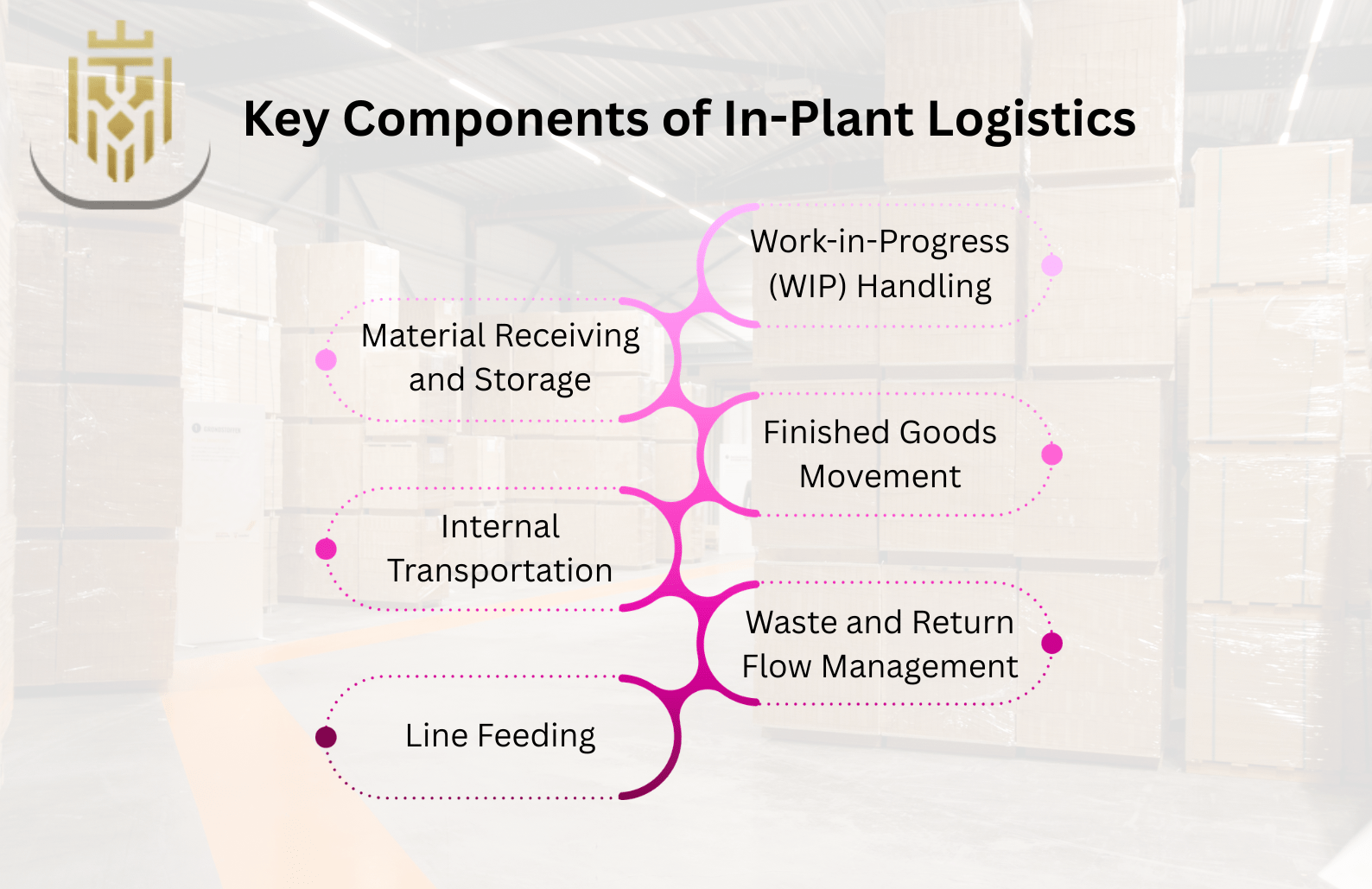
In-plant logistics is made up of several interconnected components that work together to support factory operations. Each component plays a vital role in maintaining material flow and operational efficiency.
Material Receiving and Storage
Material receiving and storage is the first step in the in-plant logistics process. It involves unloading raw materials, verifying quantities, quality checks, and storing them in designated warehouse or storage areas. Proper storage systems ensure easy access to materials while preventing damage and excess handling.
An organised receiving process supports better inventory visibility and lays the foundation for efficient in-plant material handling throughout the production cycle.
Internal Transportation
Internal transportation refers to the movement of materials between different areas of the plant, such as warehouses, production lines, and assembly stations. This includes the use of forklifts, conveyors, AGVs, or manual carts. Efficient internal logistics systems reduce unnecessary travel time and handling.
By optimising transport routes and equipment usage, manufacturers can significantly improve material flow management and reduce operational delays.
Line Feeding
Line feeding ensures that the production line receives the right materials, in the right quantity, at the right time. It is a critical function of shop floor logistics and directly impacts production continuity.
Poor line feeding can cause bottlenecks, idle labour, and production stoppages. Effective in-plant logistics management aligns line feeding schedules with production plans, enabling smoother operations and improved output.
Work-in-Progress (WIP) Handling
Work-in-progress (WIP) handling involves managing semi-finished goods as they move between different stages of production. Excessive WIP leads to congestion, higher inventory costs, and reduced visibility.
An efficient in-plant logistics system controls WIP levels to maintain steady production flow. Proper tracking and handling of WIP help manufacturers identify inefficiencies and improve shop floor logistics performance.
Finished Goods Movement
Finished goods movement covers the transfer of completed products from production areas to warehouses or dispatch zones. This step bridges in-plant logistics and outbound logistics operations.
Smooth handling of finished goods reduces damage, improves order accuracy, and speeds up dispatch processes. Well-coordinated factory logistics operations ensure customer orders are fulfilled without delays.
Waste and Return Flow Management
Waste and return flow management focuses on handling scrap, rejected materials, and reusable packaging within the plant. This is an essential aspect of lean in-plant logistics.
Efficient waste management reduces clutter on the shop floor and supports sustainability goals. A structured internal logistics process ensures waste materials are removed quickly without disrupting production activities.
Why Is In-Plant Logistics Important?
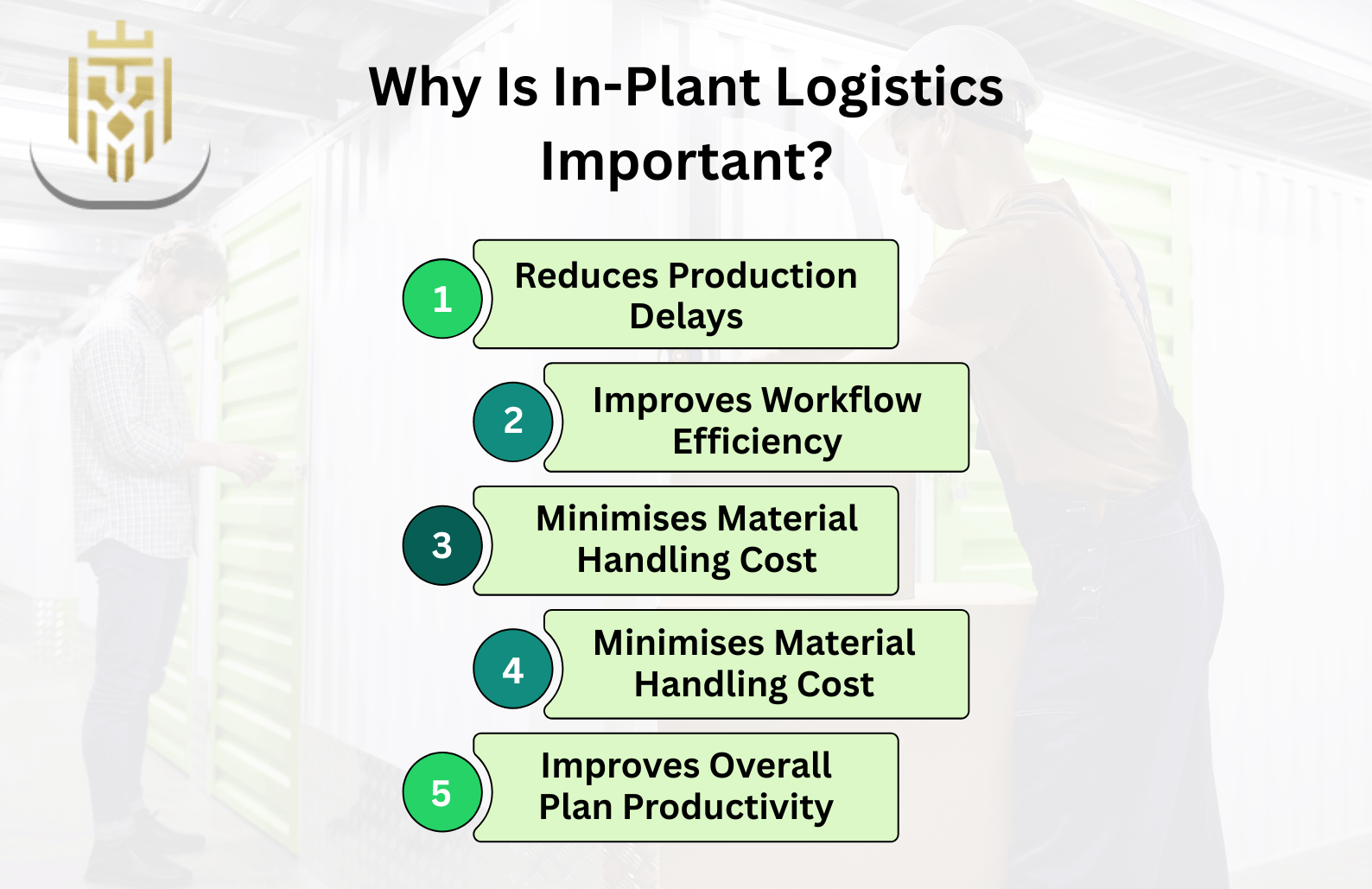
In-plant logistics plays a crucial role in maintaining efficient manufacturing operations. Poor internal logistics can lead to delays, increased costs, and reduced productivity.
Reduces Production Delays
One of the biggest benefits of effective in-plant logistics management is the reduction of production delays. When materials are delivered on time to the shop floor, production lines can operate without interruptions.
By improving internal logistics processes, manufacturers can avoid downtime caused by missing or misplaced materials and maintain consistent production schedules.
Improves Workflow Efficiency
In-plant logistics directly influences workflow efficiency across the factory. Streamlined material flow reduces unnecessary movement and ensures smoother transitions between production stages.
An optimised in-plant logistics system improves coordination between departments, resulting in faster cycle times and improved shop floor logistics performance.
Minimises Material Handling Costs
Material handling is one of the major cost drivers in manufacturing operations. Inefficient handling increases labour costs, equipment wear, and energy consumption.
Lean in-plant logistics focuses on minimising handling activities by optimising plant layout and transport routes. This leads to significant cost savings and better resource utilisation.
Reduces Inventory Holding
Excess inventory ties up capital and consumes valuable storage space. Efficient in-plant logistics management ensures materials are supplied as needed, reducing the need for large safety stocks.
Better inventory control improves visibility and supports just-in-time production strategies, helping manufacturers reduce inventory holding costs.
Improves Overall Plant Productivity
When in-plant logistics functions smoothly, the entire plant operates more efficiently. Workers spend less time waiting for materials, and machines operate at optimal capacity.
Improved internal logistics processes enhance production flow, increase output, and contribute to higher overall plant productivity.
Best Practices for In-Plant Logistics
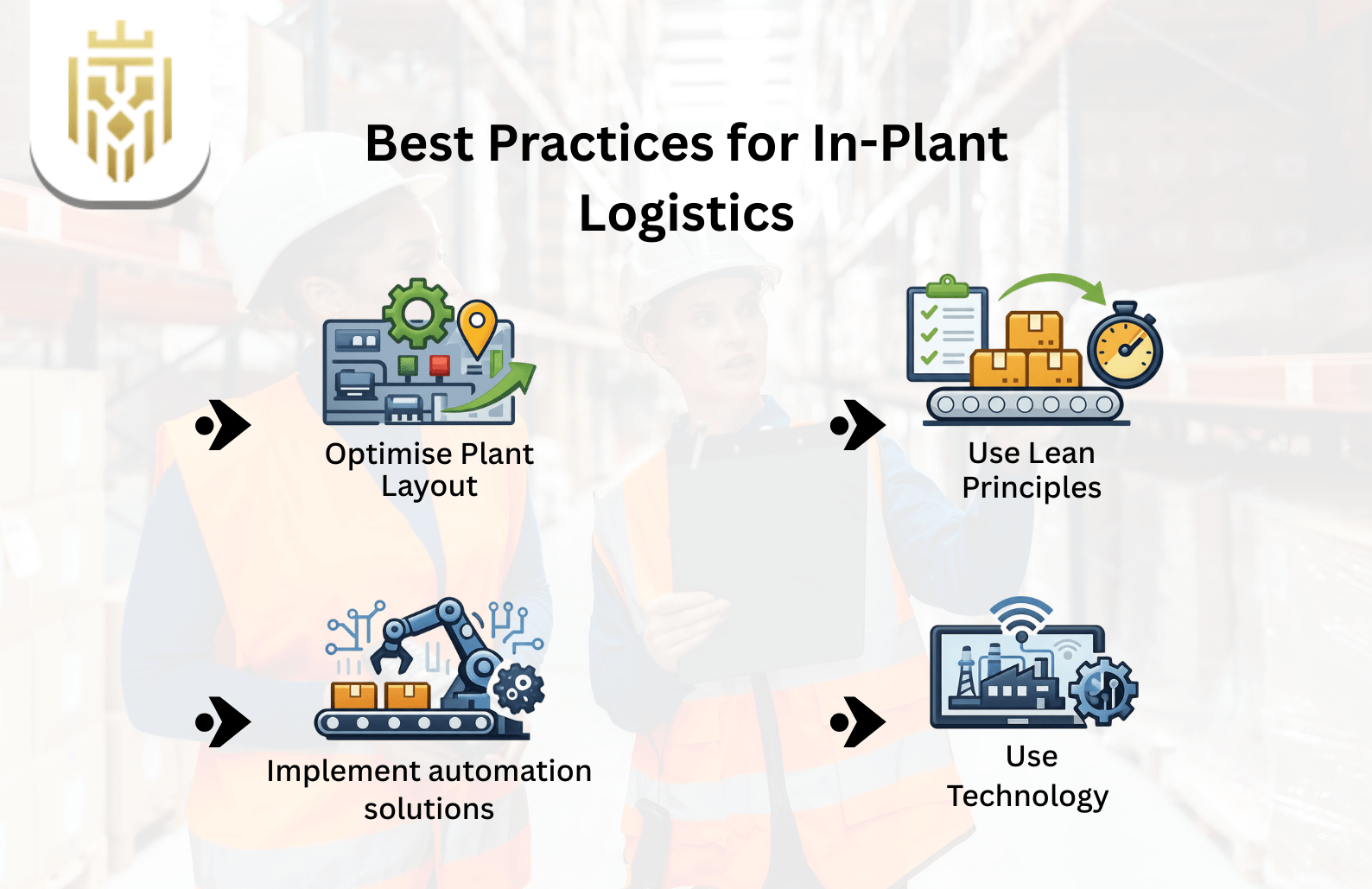
Adopting best practices in in-plant logistics helps manufacturers improve efficiency, reduce costs, and maintain operational flexibility.
Optimise Plant Layout
An optimised plant layout reduces travel distances and simplifies material flow. Proper placement of storage areas, production lines, and transport routes improves internal logistics efficiency.
A well-designed layout supports lean in-plant logistics by eliminating unnecessary movement and improving shop floor organisation.
Use Lean Principles
Lean principles such as waste reduction, continuous flow, and pull systems are fundamental to effective in-plant logistics management. These principles help eliminate non-value-adding activities.
Implementing lean logistics practices improves production flow, reduces WIP, and enhances overall factory logistics operations.
Implement Automation Solutions
Automation plays a growing role in modern in-plant logistics systems. Technologies such as conveyors, automated guided vehicles (AGVs), and robotics improve speed and accuracy.
Automated material handling reduces dependency on manual labour and supports consistent internal transportation processes within the plant.
Use Technology
Digital tools such as warehouse management systems (WMS), manufacturing execution systems (MES), and real-time tracking solutions enhance visibility and control.
Technology-driven in-plant logistics management enables data-based decision-making and continuous improvement of internal logistics processes.
FAQ
1) What is in-plant logistics?
In-plant logistics refers to the planning and control of material flow within a manufacturing plant. It includes material handling, internal transportation, line feeding, and inventory movement to support production operations.
2) What are the main components of in-plant logistics?
The main components of in-plant logistics include material receiving and storage, internal transportation, line feeding, work-in-progress handling, finished goods movement, and waste management.
3) Why is in-plant logistics important?
In-plant logistics is important because it reduces production delays, improves workflow efficiency, minimises material handling costs, lowers inventory levels, and increases overall plant productivity.