Overview of Supply Chain Flow
Supply chain flow is a smooth flow of products, information, and money through different processes in the supply chain. Through the management, there is synchronisation between suppliers, manufacturers, and distributors. An effective movement in the supply chain can improve its productivity, reduce time wastage and deliver products to customers when they are required by them due to effective coordination of the whole supply chain movement.
Types of Flow in Supply Chain Management

Supply chain management has three flows, namely material, information, and financial flow. They are all crucial in ensuring supply chain co-ordination. The knowledge of the flow types in the supply chain management assists organisations to optimise operations, balance resources and enhance the total performance of the supply chain.
Material Flow
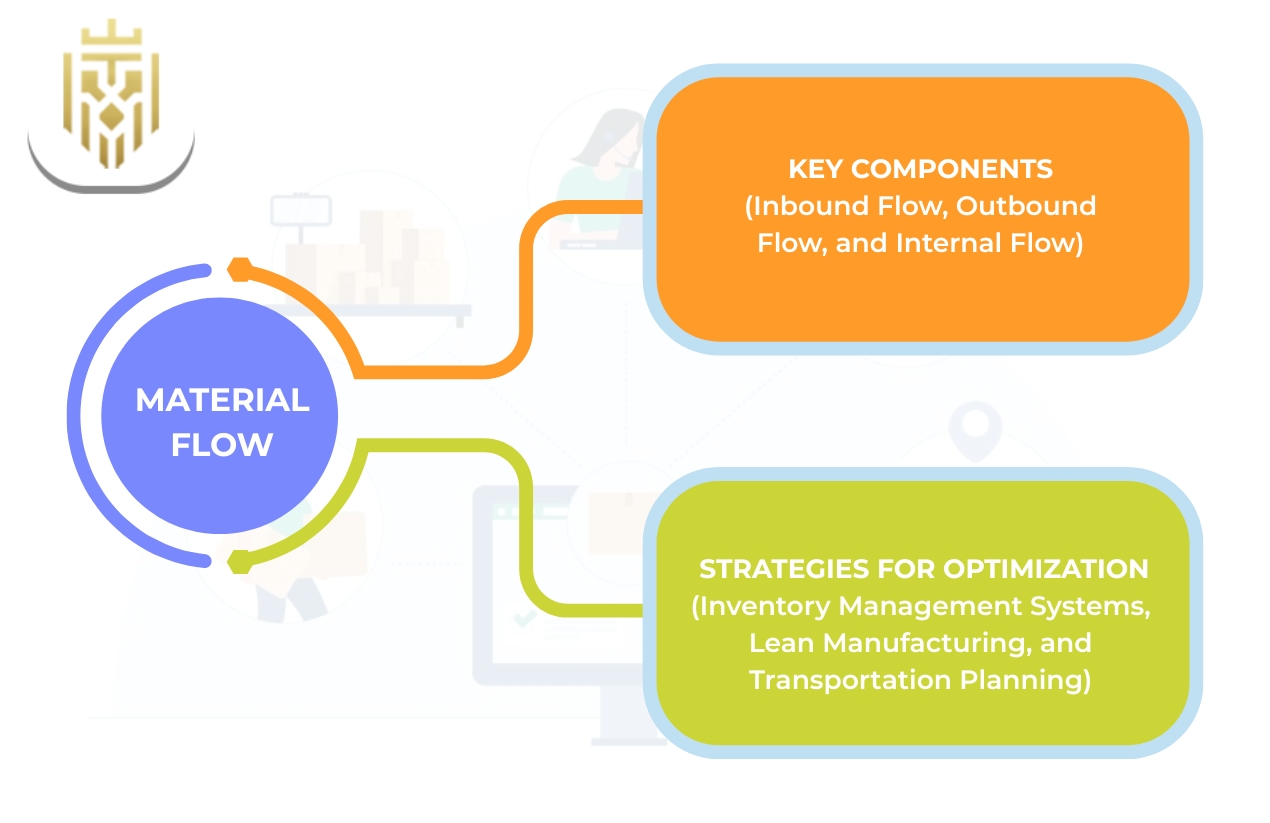
Material flow in supply chain describes the physical flow of goods in it, which is production, transportation and storage. A good material flow management submission ensures efficient supply chain management through uninterrupted availability of products. The flow of the inventory is optimised, and the accuracy of demand forecasting eliminates bottlenecks, resulting in a faster production speed and efficiency of the delivery.
Key Components
The main elements of material flow are inbound logistics, internal transfers, and outbound shipments. With effective supply management, raw materials and finished products move easily, and this enhances inventory flow and minimises waste with a synchronisation of the production, storage and distribution processes of the supply chain operations.
Inbound Flow
Inbound material flow encompasses acquisition and supply of raw materials by the suppliers. Delays are eliminated with a streamlined workflow analysis and supply management. The effectiveness of inbound logistics requires a better flow in the supply chain, which will result in manufacturing on time and reducing production interruptions due to the late delivery of material.
Outbound Flow
Outbound flow is the supply of products to the shoppers or retailers. Effective supply chain flow provides the perfect fulfilment of orders and good movement. A well-structured transport system and synchronisation of the inventory across the markets increases the consumer satisfaction and enhances operations of the supply chain as a whole.
Internal Flow
Internal product flow concerns movement inside the plant – product lines to warehouses. Transparency and minimisation of waste are enhanced by the proper control of inventory flow and data flow in real time. The efficiency of internal transfers is optimised to make the processes more efficient and at the same time provide a stable rate of end-to-end supply chain operations.
Strategies for Optimization
Material flow management is based on flow optimisation to reduce transit time and efficiency of managing a warehouse. Process flow mapping, automation and synchronising production planning are some of the strategies that can be used to reduce bottlenecks, maintain the flow of materials and enhance coordination of activities between the departments in end-to-end supply chain delivery.
Inventory Management Systems
The new inventory management tools automate and use analytics to streamline the flow of materials. They monitor the flow of demand, manage stock levels, and assist in the better coordination of the supply chain. In a dynamic supply chain, companies can have a higher operational agility and reduce the cost of storage through advanced workflow analysis.
Lean Manufacturing
Lean manufacturing enhances streamlining of material flow by removing materials that are considered waste and non-value activities. It aids in optimisation of the flows by effective provision of resources and sequencing of the production. Supply optimisation methodology will result in increased speed of throughput, shorter cycle time, and performance of the supply chain in manufacturing facilities.
Transportation Planning
Transport planning is an effective way of ensuring that there is a good flow of goods in the supply chain. Routing efficiency, shipment consolidation and planning minimise logistics expenses. A coordinated supply chain can ensure that deliveries are timely and that the delays associated with congestion, fuel consumption, or bad planning are minimised.
Information Flow

Information flow in supply chain is the linking of all the stakeholders on a real-time basis. Proper flow of information is accurate, and it guarantees improved decision-making, tracking and forecasting. Within a digital supply chain, continuous exchange of order, inventory, and production data promotes a well-managed supply chain as well as transparency of operations.
Key Components
Information flow in supply chain entails exchange of information between suppliers, manufacturers, and retailers. It comprises order information, forecasting information and inventory control. Cross-system real-time communication enhances transparency, improves workflow analysis, and improves decision-making, which allows for managing supply chains effectively with accurate forecasting and improved responsiveness.
Order Information
Order information plays a crucial role in the information flow in supply chain. It deals with following the customer needs and coordination with the production. Flexible data flow ensures that there is less wastage, and this ensures that the supply chain operations execute their orders effectively without causing any loss of transparency between the suppliers, the manufacturers and the end customers.
Forecasting Information
Forecasting information assists in predicting the demand flow and avoiding overstocking. Accurate flow of information enhances the quality of planning by providing AI-driven insights. With predictive analytics, supply chain coordination allows a deeper ability to respond to demand and allocate resources, which will facilitate the effective availability of products and production matching market trends.
Inventory Data
A good flow of information is supported by accurate inventory data. It guarantees immediate inventory visibility and demand optimisation by workflow analysis. Faster supply chain performance is based on coordinated information in different systems and reduces mistakes and operational reaction.
Strategies for Optimization
Information flow management needs to be optimised by integrating data flow tools like ERP and IoT-based solutions. These improve visibility, harmonise operations and coordinate the supply chain. Predictive decisions are made with the aid of analytics and automation, which enhances the supply chain performance and minimises the communication gaps among various functional domains throughout the global networks.
ERP Systems
ERP systems combine multiple processes within the supply chains and support a flow of information in a single direction within the departments. They focus on data flow, increase cooperation and coordinate the supply chain. With the help of ERP, organisations are in a better position to predict, plan, and control resources to maintain a seamless and correct operation.
Blockchain Technology
The blockchain technology enhances information flow transparency within the supply chain. It offers tamper-free documentation of transactions and product movements. This type of supply chain coordination minimises fraud, instils trust, and enhances traceability, which makes all its end-to-end supply chain members preserve data integrity.
IoT Devices
IoT devices increase the flow of information through real-time operational data. They enhance workflow analysis and inventory tracking and simplify logistics. The connected sensor use reinforces the supply chain operations, minimises error, and enables agile decision-making to provide efficient flow in the supply chain.
Financial Flow
Financial flow in supply chain management involves the flow of funds among the parties, and it maintains consistent operations. Effective financial flow supply chain management maintains liquidity, supply chain alignment, and cash flow and production schedule alignment to ensure unending business operations.
Key Components
Financial flow used in supply chain management includes payment, credit and invoice payments among partners. It guarantees the coordination of liquidity and supply chain through the management of cash flow. Live monitoring of financial flows and automation minimises the time loss, increases the accuracy and reinforces supply chain performance with clear fiscal communication and accountability.
Payment Schedules
The payment schedules provide timely payments between sellers and purchasers. Effective supply chain management is achieved through management of this financial flow, and trust is maintained. Automated scheduling systems enhance better management of supplies by preventing delays of payments and financial discipline throughout the supply network.
Invoice Processing
Invoice processing helps in the flow of finance and precision in the billing. Automation tools maintain the consistency of the data flow and expedite the approvals. Efficient tracking of invoices enhances supply chain co-ordination, minimises disputes and enhances financial accuracy in the procurement and sales departments.
Credit Management
Credit management has healthy cash flow and risk reduction in financial flow operations. Companies determine the reliability of suppliers and their ability to pay. Proper supply chain coordination will prevent the occurrence of financial bottlenecks that will keep supply chain operation and business on track.
Financial Reporting
Sound financial reporting enhances financial flow supply chain management. It integrates accounting and supply chain processes to enhance compliance and budgets. The openness of reporting develops trust among the stakeholders, which aids in long-term enhancement in performance of a supply chain.
Best Practices for Managing Financial Flow
Automation, workflow analysis, and digital payment systems are best practices for a smooth financial flow in supply chain. Setting up transparent payment plans, implementing electronically based invoicing, and integrating predictive finance tools will guarantee smooth cash flow that will facilitate the smooth flow of supply chains and stability in multi-layer supplier systems.
Working Capital Optimization
Working capital optimisation enhances financial flow, as it enhances liquidity and efficiency in funding. Companies can coordinate and gain resiliency in their supply chains by using supply management and prompt collections. Optimised cash flow improves the business agility and end-to-end supply chain performance.
Transparent Invoicing
The practice of transparent invoicing builds trust in the supply chain activities. Transparency of financial flow helps in solving conflicts easily. Those firms that embrace digital workflow analysis do settle faster and form better partnerships by having transparency of the transactions performed in real time.
Automated Payment Systems
With automated payment systems, there are minimal delays and errors in the financial flow, which is streamlined. There is an integrated data flow between the supply chain operations and finance, making it more efficient. The accuracy, reliability, and accountability of all the transactions related to the flow of funds are guaranteed by this automation.
Advantages of Managing Supply Chain Flows
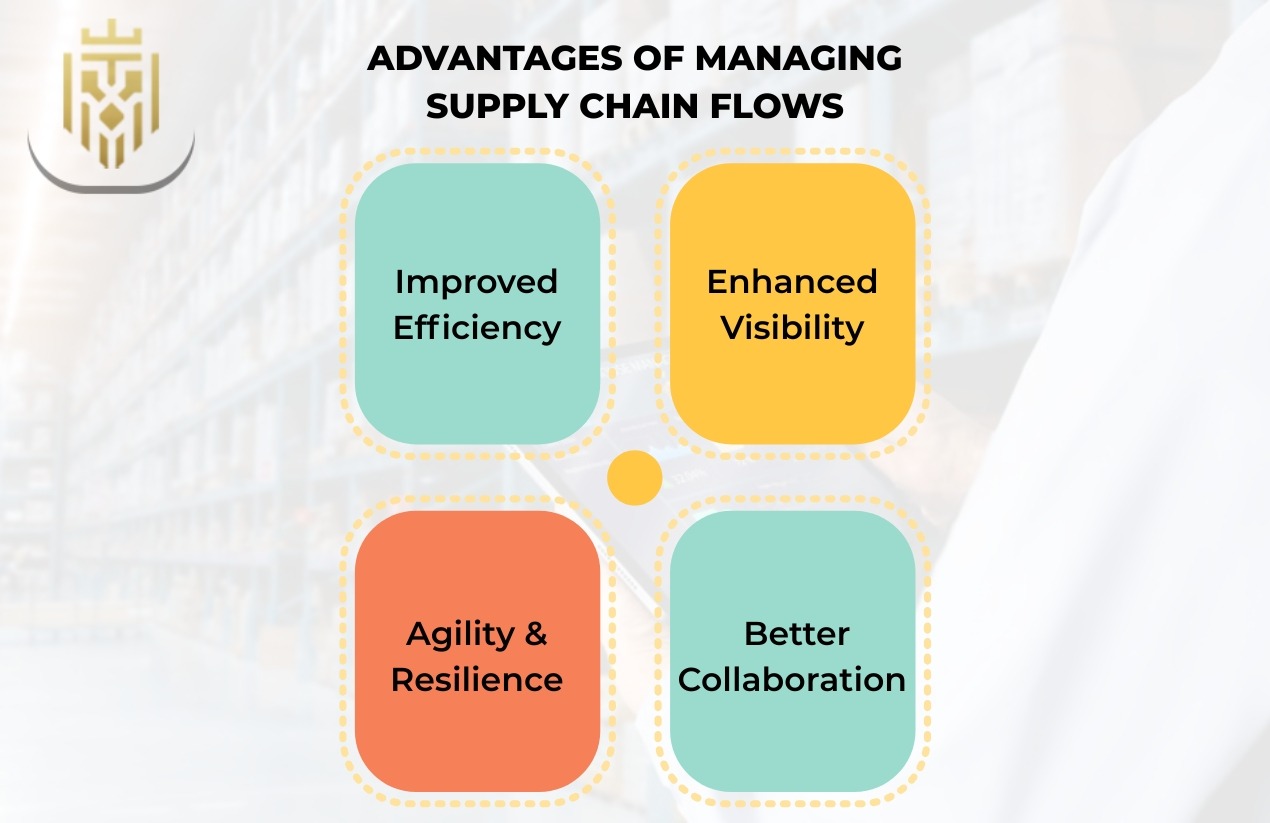
The supply chain flow is effectively managed to provide a better flow of materials, financial flow, and information flow. The overall effects of these are enhanced lead times, reduction of waste, and tightening of coordination. Optimised supply chains are also enhanced by properly aligned supply chain processes that promote resilience to supply chain disruption, global trade environments, and supply transparency.
Improved Efficiency
Supply chain flow management also optimises utilisation and minimises wastage. Complete optimisation of the flow results in the reduction in time to respond, costs, and performance of the supply chain, which contributes to sustainable growth of business.
Enhanced Visibility
Real-time data flow and accuracy in information flow enhance the level of operation visibility. This enhances supply chain co-ordination hereby the stakeholders are capable of foreseeing challenges and acting accordingly.
Agility & Resilience
Supply chain flow is optimised to provide flexibility to respond to disruptions. Powerful end-to-end supply chain connectivity and workflow analysis are supportive of resilience and responsiveness in dynamic markets.
Better Collaboration
The improved management of the information flow promotes effective cooperation between partners. Open communication will enhance the work of supply chains, and the aims will be in harmony with efficiency and success.
Challenges in Supply Chain Flow Management
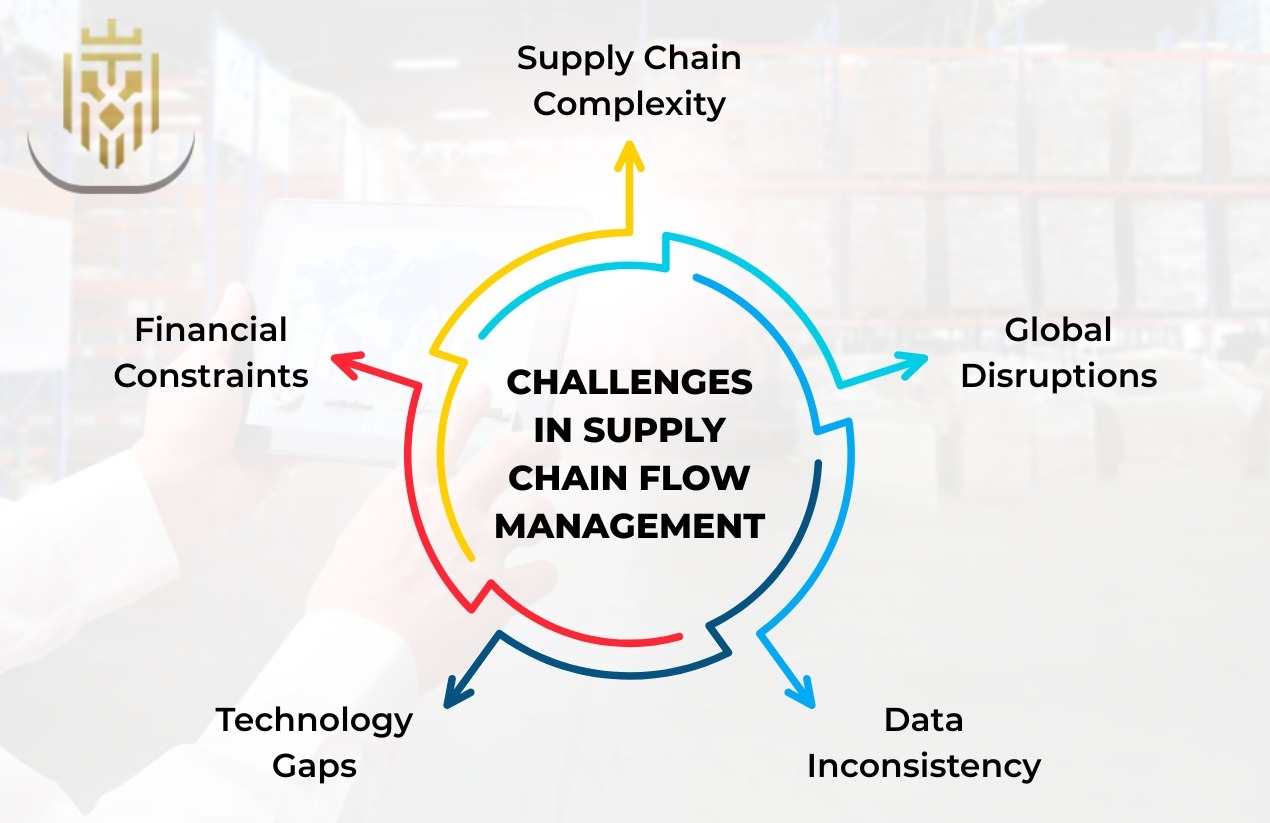
The challenge of managing types of flow in supply chain management has issues such as fragmentation of data, financial limitations, and international break-ins. The lack of consistent information flow, quickness in delivery, and the lack of the optimal system of flow are limiting the supply chain performance, and there is a need to implement the best possible solution of visibility in real time, faster adoption of smarter technology, and better coordination between the global and regional partners.
Supply Chain Complexity
Diversity in supply chain processes is complex to deal with. The global networks of material flow and information flow are to be maintained with the advanced strategies of flow optimisation that will keep the performance at the required level.
Global Disruptions
Global disruptions affect the effective flow of the supply chain, as it influences the transportation of goods and the production time. Adaptive supply management reduces risks by contingency planning and adaptable supply chain coordination.
Data Inconsistency
Inefficient data flow management leads to information flow visibility gaps. Normalised systems and correct analytics enhance supply chain performance with precise synchronised data.
Technology Gaps
Obsolete tools do not facilitate flow optimisation. The closing of the gaps is done through investing in the modern workflow analysis and automation, which guarantees a more even supply chain operation and better responsiveness.
Financial Constraints
The low capital is a limitation to the management of financial flows. Liquidity is enhanced through supply optimisation and cost control to ensure operation continuity in resource-constrained conditions.
FAQs
1) What is the role of technology in managing supply chain flow?
Technology enhances supply chain flow: with automation, data flow analytics, and workflow optimisation, efficiency, transparency, and real-time decision-making on global networks are ensured.
2) How does information flow support material flow?
Material flow is improved through the flow of information, which provides real-time information about the inventory, orders, and demand, which allows proper scheduling, coordination, and smooth supply chain operations.
3) How do companies measure supply chain flow efficiency?
The metrics employed by companies to measure flow efficiency of the supply chain include lead time, inventory flow rate, accuracy in taking orders, reduction in cost, and performance of the supply chain as a whole.
4) What are the common tools for improving supply chain flow?
Some of the most common tools are ERP systems, warehouse management systems, IoT devices, and analytics software, which increases flow optimization, their visibility, and end-to-end supply chain coordination.