In the domain of logistics and shipping, words like consignor and consignee are so common that people tend to use them without even realizing how often they are used. But if you are not acquainted with how the delivery system works, these words could be a source of confusion for you. If you are sending a parcel, handling shipments for a business, or dealing with freight logistics, it is important for you to understand these terms.
To put it very simply, consignor and consignee meaning comes down to two major parties involved in a shipment. The consignor, or shipper, are the ones who send the goods, while the consignee, or recipient, is the person or company who takes delivery of the goods. Identifying the difference between consignor and consignee is a key factor in preventing mix-ups when it comes to paperwork, delivery, and payment obligations.
Who Is a Consignor?
A consignor is whomever, a person, company, or other entity, that ships goods from one location to another. They are the ones responsible for starting the shipment process and physically giving the goods to the courier, transporter, or logistics company. Put simply, the consignor is the sender of the shipment.
For instance, if a company dispatches goods to a customer, the company is the consignor.
Key Responsibilities of a Consignor
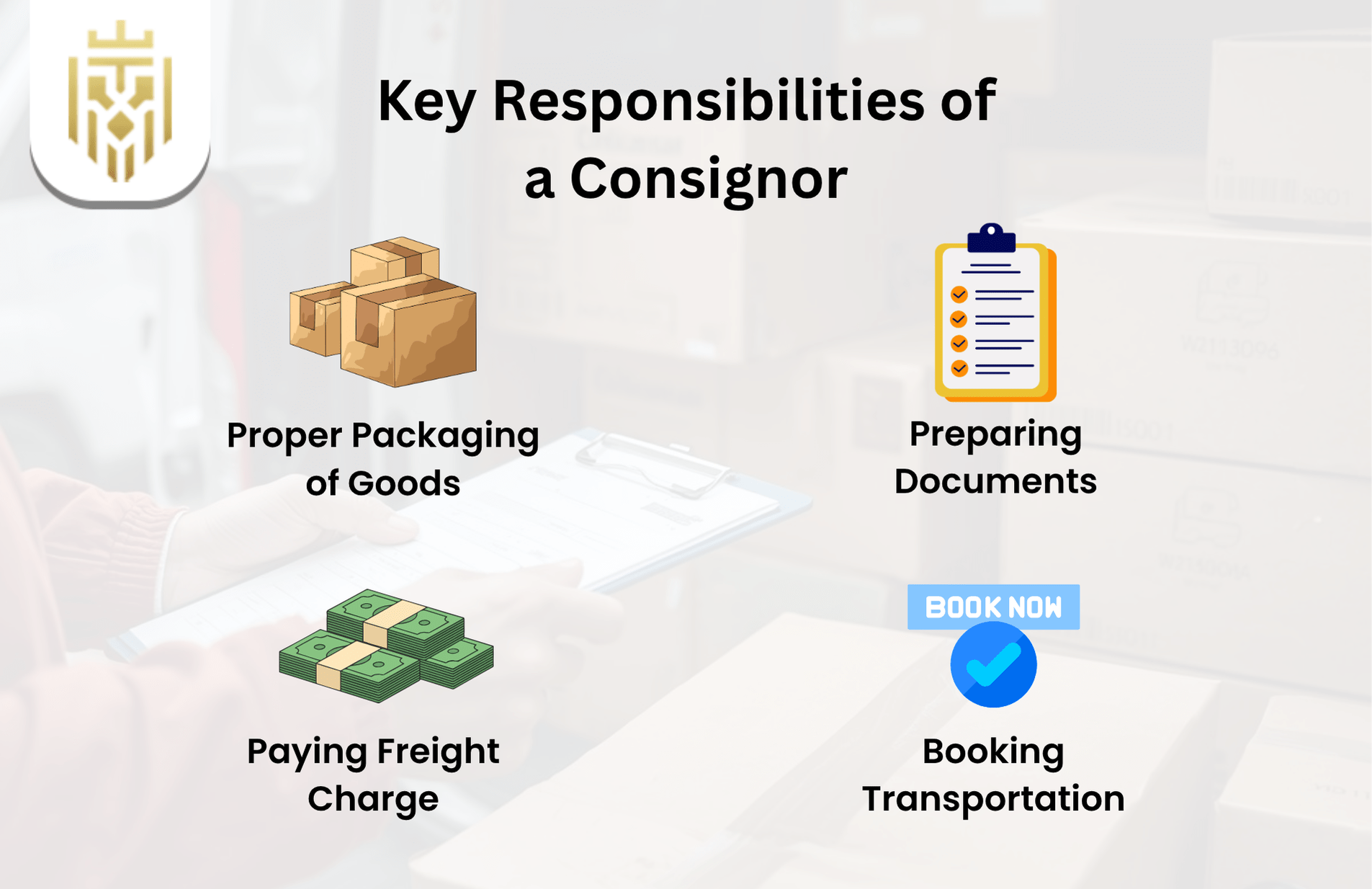
The consignor is a vital part in making sure the shipment is correctly prepared and sent out.
Proper Packaging of Goods
It is the consignor’s responsibility to check that the goods are safely packed. Packaging in a proper way is the best way to keep the goods safe from any possible damage during transport and handling. In case of delicate or valuable goods, additional protective materials like bubble wrap or strong boxes are frequently used.
Preparing Documents
Consignors commonly handle preparation of shipping documents. These may include:
- Invoice
- Packing list
- Shipping label
- Bill of lading (for large shipments)
Having the right paperwork on time is one of the ways to make sure the shipment isn’t held up and it gets delivered smoothly.
Paying Freight Charges
Most of the time, the consignor is the one who pays for the shipment or freight cost when they make the reservation. Still, it may be that the shipping cost is assigned to the consignee, depending on the pact between the parties involved.
Booking Transportation
It is the consignor who finds the courier or logistics company and arranges the shipment. That means he or she picks the service option (standard, express, or freight) and decides when the shipment is either collected or handed over.
Who Is a Consignee?
A consignee is the individual, company, or entity to whom the shipment is received. They are the ultimate recipient of the goods that have been dispatched by the consignor. Simply put, the consignee is the one who gets the shipment.
Let’s say, if you purchase a product over the internet, you become the consignee whereas the one who sells the product is the consignor.
Key Responsibilities of a Consignee
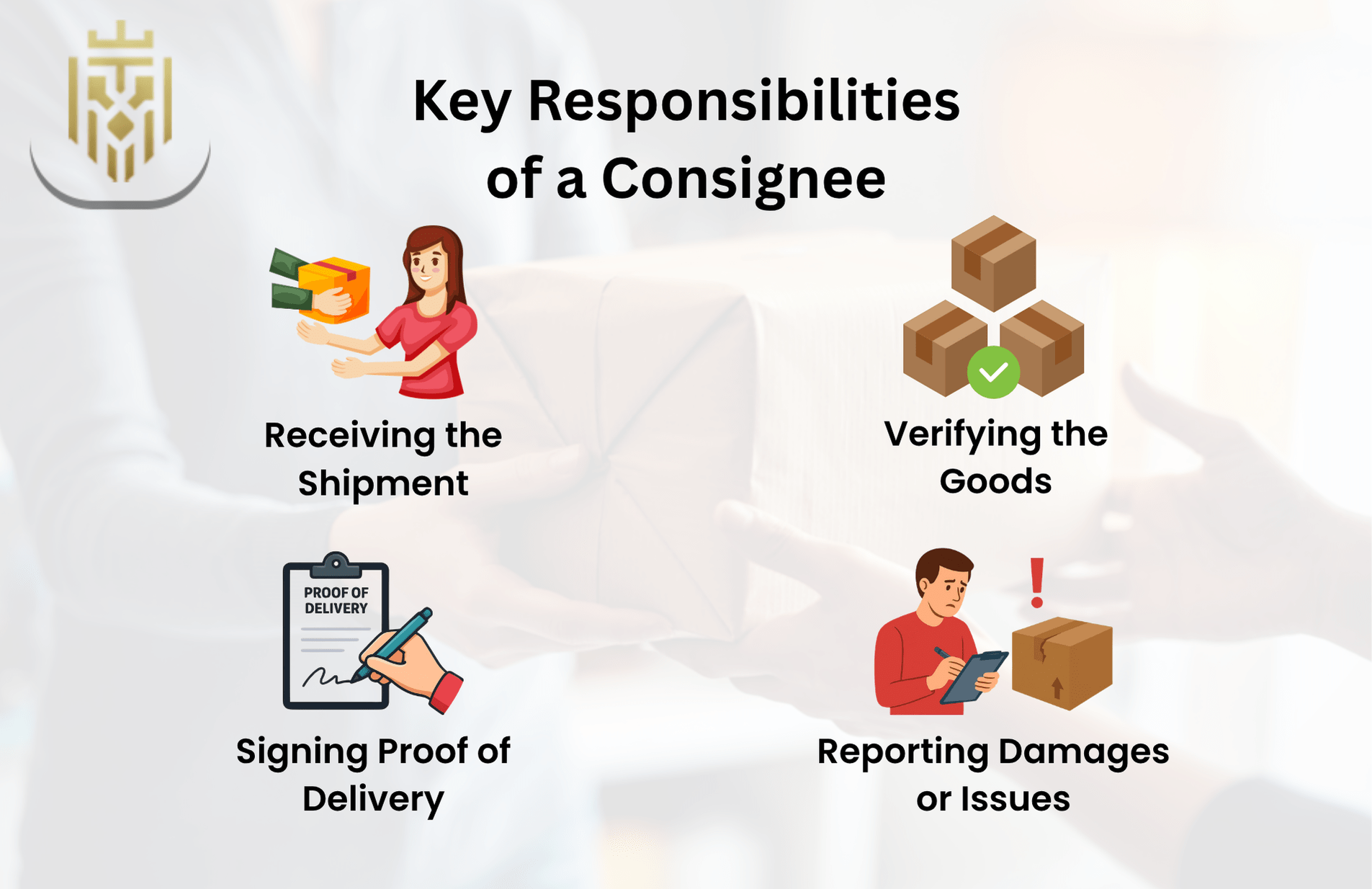
The work of a consignee starts when the shipment gets to its destination.
Receiving the Shipment
The consignee should take the delivery when the shipment arrives. This could be through arranging with the carrier or being present at the place of delivery.
Verifying the Goods
At receiving the shipment, the consignee must check whether the goods are the correct ones and are not damaged. This comprises of confirming the number, the standards, and the packing of the products.
Signing Proof of Delivery
Upon receiving the shipment, the consignee generally has to sign a proof of delivery (POD). This serves as an acknowledgment that the goods have been successfully delivered.
Reporting Damages or Issues
If the shipment is damaged, some items are missing, or there are other problems, the consignee should contact the courier company or consignor right away. Reporting on time facilitates the resolution of the problems quicker.
Key Differences Between Consignee and Consignor
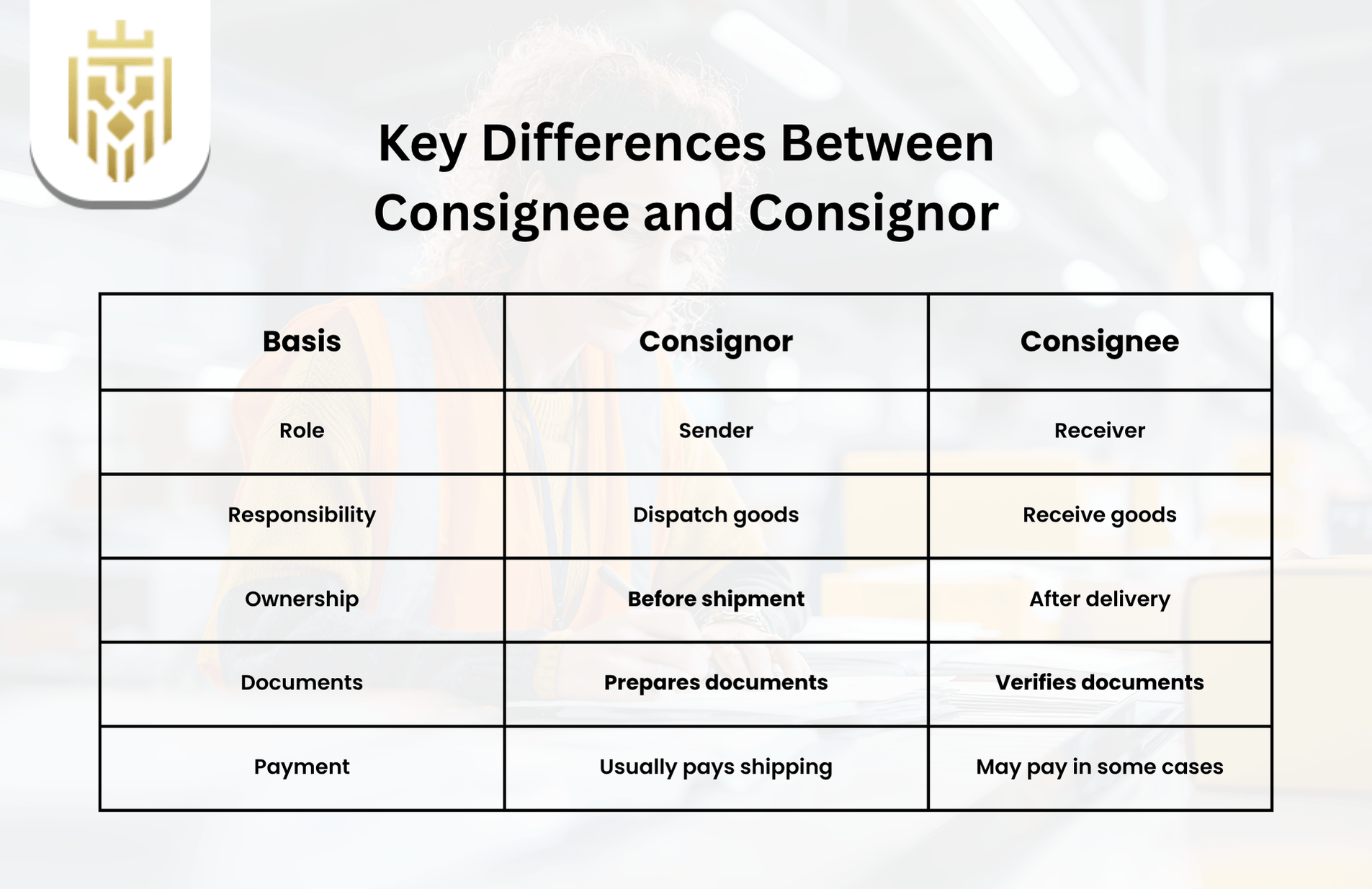
Knowing the difference between consignor and consignee is made simpler if you compare the role of each.
Role
A consignor is the one who sends the goods and is therefore responsible for commencing the shipment process.
A consignee is the party that receives the goods and is therefore the one who acknowledges the delivery.
Ownership
The consignor is, in most cases, the owner of the goods when they are sent off. Typically, according to the terms of the agreement, the consignee takes ownership of the goods at the time the shipment is delivered.
Responsibilities
Besides packaging, the consignor has to take care of all documentation and dispatching of the goods. The consignee, on the other hand, needs to be prepared for receiving, checking, and confirming the delivery.
Risk
If anything happens, such as damage or loss of goods while in transit, the consignor may be responsible for that risk until the goods have been handed over, depending on the agreed shipping terms.
Upon delivery, the consignee could be responsible for those risks.
Documentation
The consignor produces shipping documents like invoices labels shipping instructions, etc.
The consignee cross-checks those documents and confirms the receipt.
Payment
Often it is the consignor who pays the shipping costs before the goods are shipped.
However, in cases like freight collect shipments, it is the consignee who pays the charges at the time of delivery.
Conclusion
In short, consignee and consignor are the two main parties in a shipment. The consignor ships the goods, and the consignee is the one who gets them. Both roles are very important for making sure the delivery goes smoothly and is successful.
Understanding the consignor and consignee meaning can help you steer clear of mix-ups with logistics, paperwork, and communication. Whether you are sending a small parcel or handling big shipments, understanding the difference between consignor and consignee will make the whole process a lot simpler and more effective.
FAQ
1) Who Is a Consignor?
A consignor is a person, a company, or an organization that decides to send the goods or items from one location to another. They take the responsibility of packaging the products, preparing the shipping documents, and finally, delivering the shipment to the courier or logistics company.
2) Who Is a Consignee?
A consignee is a person or a company receiving the shipment. They have the responsibility for the acceptance of the delivery, inspection of the goods, and signing the proof of delivery to confirm the receipt.
3) What is the difference between a consignor and a consignee?
The main difference between consignor and consignee is their role in the shipment process. The consignor or the sender of the goods, on the other hand, the consignee or the recipient of the goods. The consignor is in charge of sending off and documenting the shipment, while the consignee is in charge of receiving and checking the shipment.