What Is Bulk Shipping?
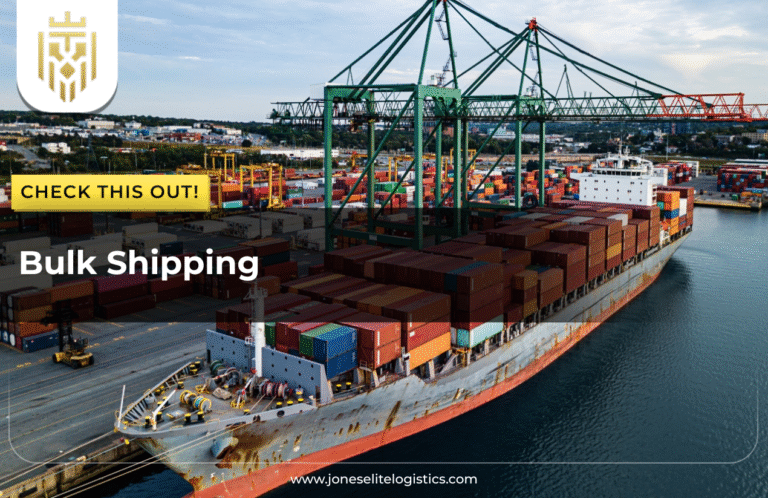
Bulk shipping refers to the transportation of large quantities of unpackaged goods in a single shipment. In contrast to containerised cargo, bulk cargo is loaded loose and carried into the vessel, tanker or transport unit cargo hold. Such commodities as coal, grains, minerals, crude oil, and chemicals are usually traded using this method.
The bulk shipping meaning lies in its ability to move massive volumes efficiently over long distances. Bulk shipping in logistics is widely used in sea freight due to its cost efficiency and ability to support global supply chains.
Types of Bulk Shipping
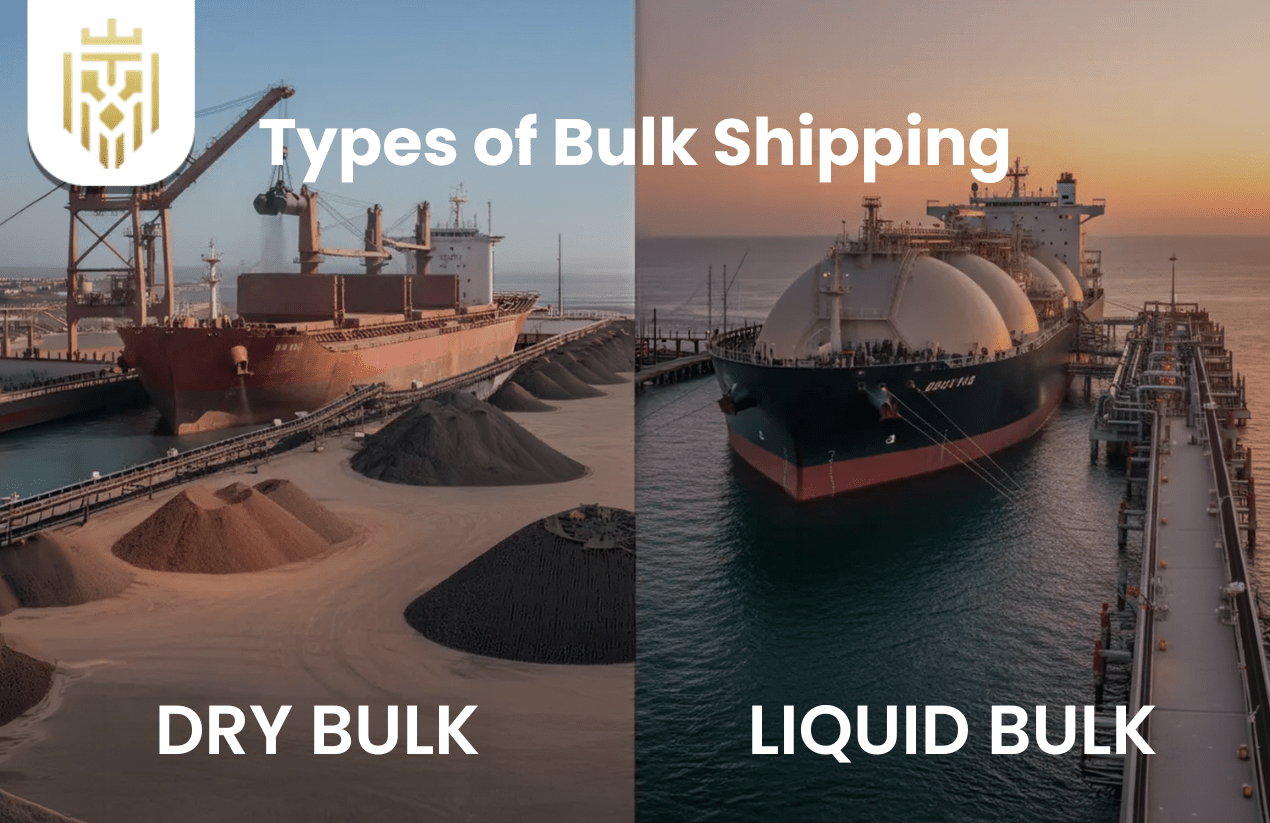
Bulk shipping can be classified based on the physical nature of the goods being transported. The two major types are dry bulk shipping and liquid bulk shipping. Both the types use specialised vessels, handling systems, and safety procedures.
Dry Bulk Shipping
Dry bulk shipping includes the transport of solid bulk cargo that is not packaged and flows freely. Examples of common dry bulk commodities are coal, iron ore, grains, cement, fertilisers and sand. These products are crucial for the industry, construction, and food chains.
Dry bulk shipping typically uses bulk carriers designed with large cargo holds, allowing efficient loading and unloading through conveyors, cranes, or gravity-based systems. It is still among the most common types of bulk transport of maritime trade.
Liquid Bulk Shipping
Liquid bulk shipping focuses on transporting liquids and gases in large quantities. These are crude oil, petroleum products, chemicals, liquefied natural gas (LNG), and edible oils. Bulk cargo by liquid is transported through specialised tankers that have pumping systems and stringent safety measures.
Liquid bulk shipping is vital for energy supply chains and chemical industries. It facilitates international trade whereby the smooth movement of liquid commodities by the ocean shipping routes is made easy.
Advantages of Bulk Shipping
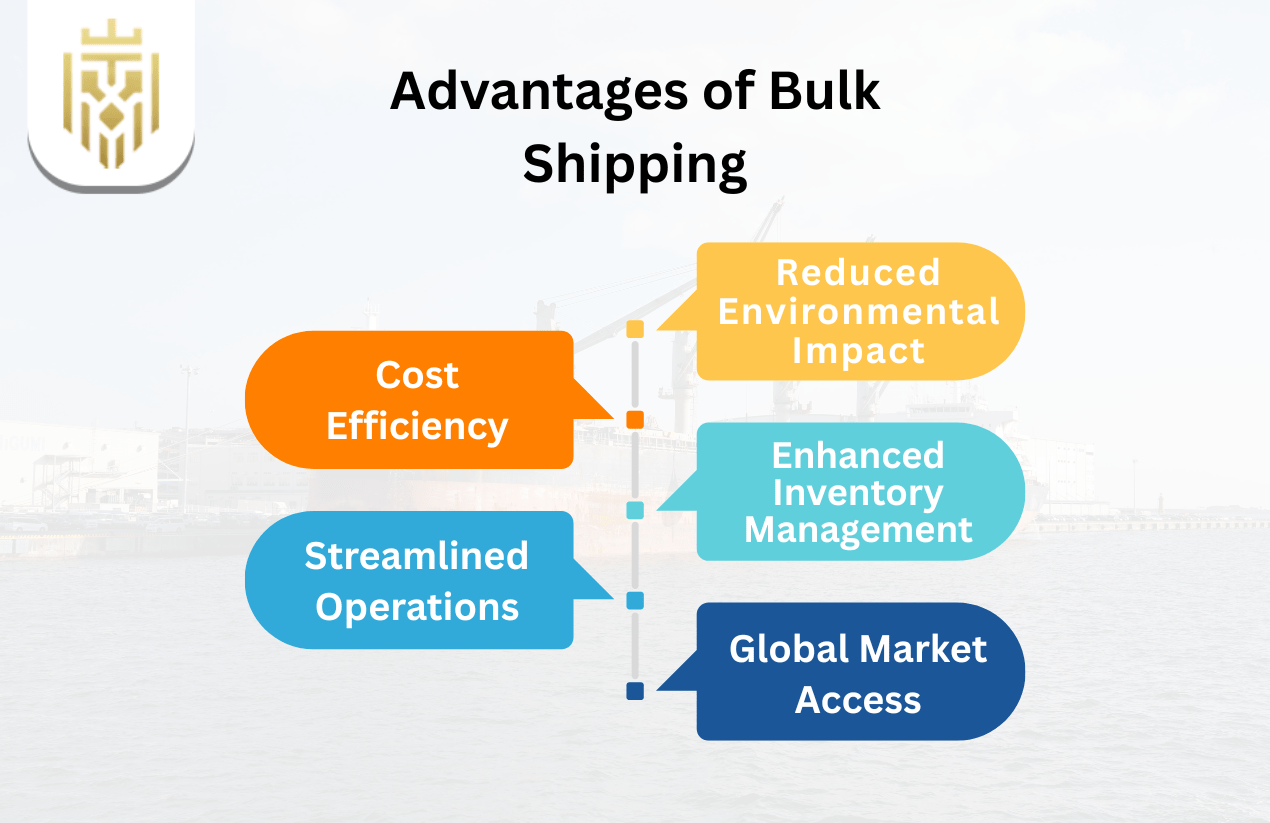
Bulk shipping offers various advantages that make it the preferred mode of transport for high-volume goods. From cost savings to environmental benefits, bulk shipping supports efficient and scalable logistics operations.
Cost Efficiency
One of the biggest advantages of bulk shipping is its cost efficiency. Movement of goods on a large scale also drastically lowers the cost per unit as compared to small shipments or containerised freight. This makes bulk shipping ideal for commodity shipping, where margins are often tight. The reduced handling and packaging requirements also decrease logistic costs, particularly sea freight and ocean shipping.
Streamlined Operations
Bulk shipping allows for simplified and faster operations. The bulk cargo is loaded directly into the vessels, which reduces the use of single packaging and containerised handling. This minimises the turnaround time in ports and enhances the efficiency of transport. Efficient bulk transportation processes enable the service providers in the logistics industry to handle large volume movement with few delays.
Reduced Environmental Impact
Bulk shipping contributes to a lower environmental footprint per unit of cargo transported. Big bulk carriers and tankers also use less fuel per tonne of cargo than smaller vessels or roads. With increasing focus on sustainable logistics, bulk shipping in maritime trade supports reduced emissions and efficient resource utilisation.
Enhanced Inventory Management
Bulk shipping enables better inventory planning for manufacturers and suppliers. The large orders provide constant supply and less reordering. This is especially helpful to those industries that require raw materials and constant production processes. Efficient bulk shipping in logistics helps businesses maintain optimal stock levels and avoid supply disruptions.
Global Market Access
Bulk shipping provides access to global markets by connecting producers with international buyers. The ocean shipping networks can be used to transport commodities that are produced in a certain region to other markets located in far areas. This is because this global reach facilitates international trade, export growth, and economic development in industries.
How Does Bulk Shipping Work?
Understanding how bulk shipping works helps businesses plan efficient logistics strategies. The bulk shipping process involves multiple stages, each requiring careful coordination and compliance with safety standards.
Cargo Preparation
Cargo preparation is the first step in bulk shipping. Depending on their physical characteristics, the goods are inspected, measured and ready to be transported. In the case of dry bulk cargo, there are moisture levels and the risk of contamination. In the case of liquid bulk, quality and safety inspection is a necessity. Cargo preparation is a key factor that makes the handling of cargo safe and reduces losses when transporting in bulk.
Loading
The process of loading the bulk cargo into the vessel or tanker makes use of specialised machinery like conveyors, pumping machines, or cranes. This is done under strict supervision to ensure the stability of the vessel to prevent spillage. In the normal operations of sea freight and maritime trades, it is important that schedules are maintained with the aid of efficient loading.
Transportation
In the course of transportation, bulk carriers and tankers sail along the traditional routes in ocean shipping. Transit time and safety are affected by weather conditions, sea state and regulatory requirements. Advanced navigation systems and vessel management practices ensure that bulk shipping operations remain reliable and secure throughout the journey.
Unloading
The unloading of bulk cargo needs specialised facilities of ports, such as silos, pipelines, and discharge systems. The procedure should be handled with a lot of care so as not to lose or even contaminate cargo. Quick and efficient unloading improves port productivity and reduces vessel idle time in bulk shipping logistics.
Distribution
Bulk goods are moved to end destinations through rail, road or the inland waterways after unloading. This final distribution stage connects bulk shipping with domestic logistics networks. Effective distribution has made sure that bulk cargo is delivered to manufacturers, refineries or storage facilities in good time.
Challenges in Bulk Shipping
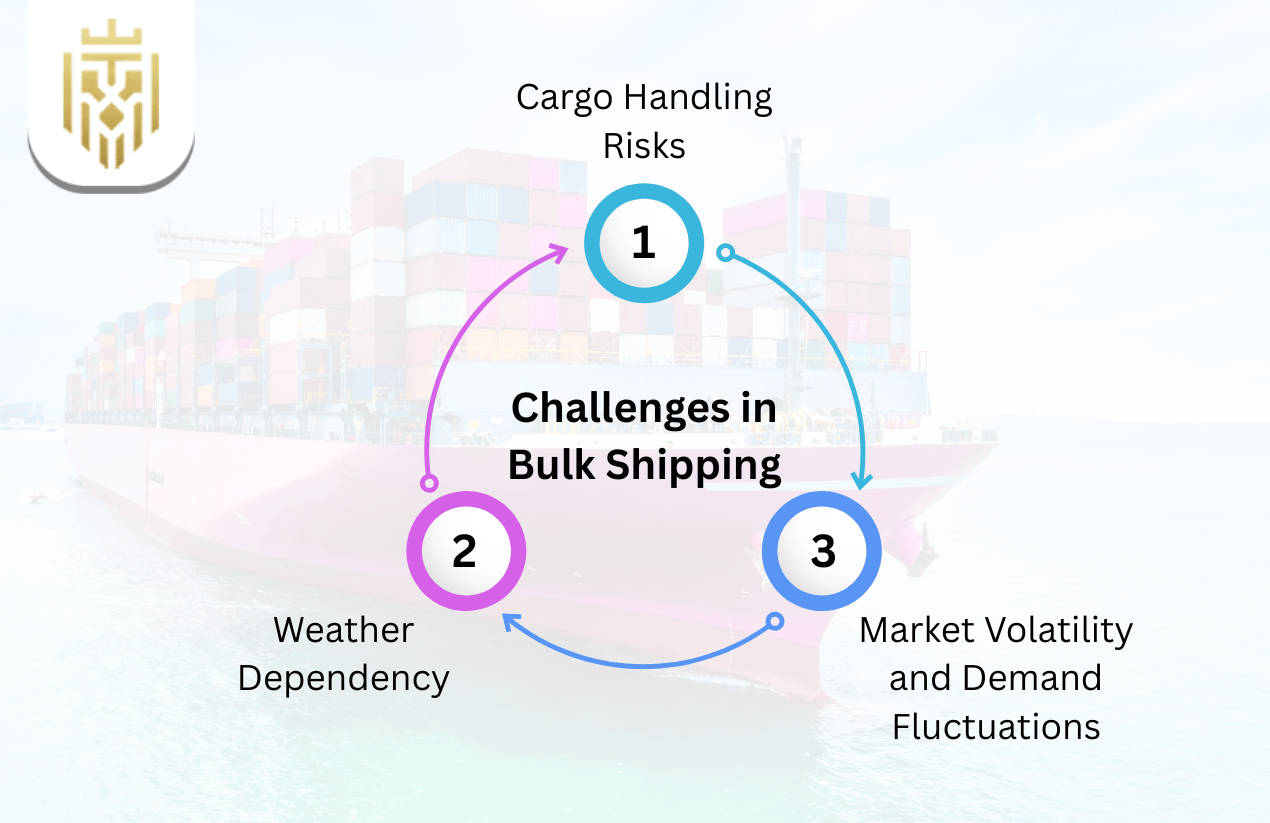
Despite having various advantages, bulk shipping also faces several challenges that logistics providers and shippers must address to ensure smooth operations.
Cargo Handling Risks
Bulk cargo is more prone to damage, spillage and contamination than packaged goods. It may cause losses and dangerous situations in case of improper usage. Managing cargo handling risks is a key concern in both dry bulk shipping and liquid bulk shipping operations.
Weather Dependency
Bulk shipping is highly dependent on weather conditions. Bad weather, storms and rough seas may slow down shipments and make operations more risky. One of the greatest problems in ocean transport and marine trade is weather dependency, particularly in long-distance, large-scale transportation.
Market Volatility and Demand Fluctuations
Bulk shipping is closely tied to global commodity markets. Shifts in demand, pricing, and geopolitical factors can affect shipping volumes and freight rates. Market volatility makes planning and capacity management more complex for bulk shipping providers.
FAQ
1) What is bulk shipping?
Bulk shipping is the transportation of large quantities of unpackaged goods in a single shipment. Commodities that are transported via sea freight and maritime trade usually include coal, grains, oil, and chemicals.
2) What are the different types of bulk shipping?
The main types of bulk shipping are dry bulk shipping, which includes solid goods like minerals and grains, and liquid bulk shipping, which involves transporting liquids such as oil and chemicals.
3) What are the key benefits of bulk shipping?
The key benefits of bulk shipping include cost efficiency, streamlined logistics operations, reduced environmental impact, improved inventory management, and access to global markets through ocean shipping.