What Is Material Management?
Material management refers to a series of organized activities that companies undertake to plan, buy, store and regulate the control of materials necessary for production and other business operations. It is a way of making sure that materials are there at the time of need while at the same time keeping the cost of unnecessary inventory to the minimum.
To put it simply, material management is centered on handling the material flow right from the entry point (suppliers) to storage and finally the production/usage stage. It is a bridge between various departments such as purchasing, inventory control, warehousing, and distribution.
A well, structured material management process is a major factor in helping organizations to
- Maintain continuous production schedules
- Minimize inventory holding costs
- Avoid stock shortages
- Enhance the supply chain efficiency
The 5 R’s of Material Management
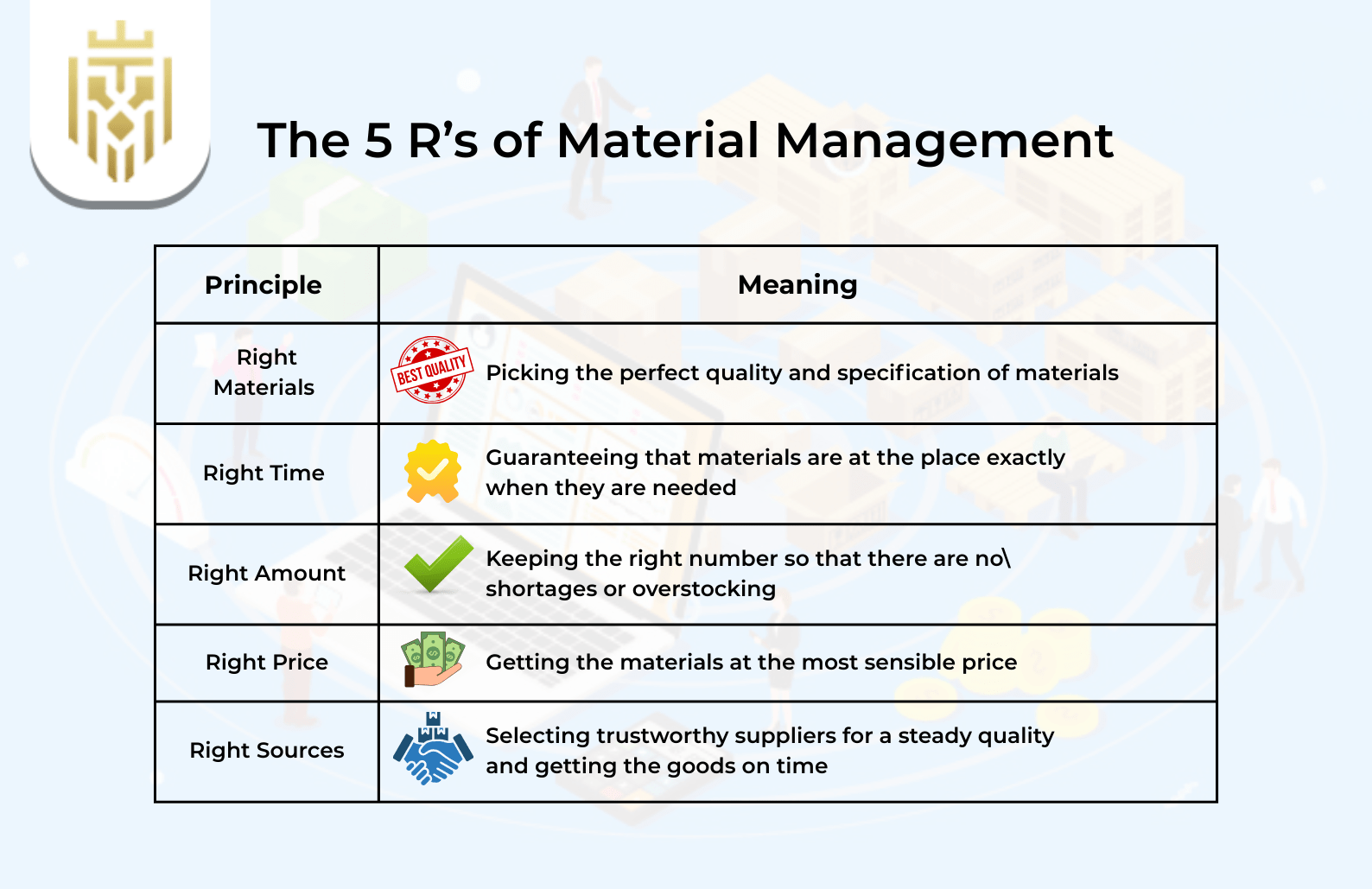
Material management is based on the 5 R’s principle which emphasize how materials should be managed in order to reach efficiency and cost control.
Right materials
The selection of the right materials is one of the key factors that determine product quality as well as operational efficiency. Getting the right materials is not only avoiding several hiccups in the production process but also preventing product defects that might come as a result of using improper materials.
Right time
The availability of materials should be synchronized with their use in production or operations. Any hold-up in the delivery of materials is a sure way of causing production stoppages, missing deadlines, and adding to operational costs.
Right amount
Ordering just the right amount of materials is key. Overstocking will mean higher storage costs, whereas understocking might mean that production is halted. Good planning is the way to maintain even inventory levels.
Right price
Keeping production costs under control is one of the reasons why it is important to buy materials at the right price. This will entail negotiating with suppliers, implementing strategies for purchasing in bulk, and keeping an eye on market price fluctuations.
Right sources
Picking up dependable suppliers is the way to go for a steady supply, quality, and on-time deliveries. Besides this, healthy supplier relationships also go a long way in ensuring the uninterrupted flow of your operations.
Importance of Material Management
Material management is one of the key factors behind improved operational efficiency and reduced costs in a business. Improper planning and control of materials may lead to shortage of inventory, excess inventory or even production delays.
Ensures Uninterrupted Operations
Managing a material system properly means that production or other work activities are done continuously without any breaks. With materials available at the time when they are needed, businesses can keep running workflows without hiccups and satisfy customer demands efficiently.
Reduces Overall Costs
Lowers total expenses good material management not only helps in reducing purchase, storage, transportation, and wastage costs; but also in optimizing procurement and inventory levels that allows businesses to evade unnecessary expenses.
Improves Inventory Control
Correct inventory monitoring enables companies to hold their stocks at an optimum level. This is important for both avoiding overstocking and ensuring the availability of materials when they are needed.
Minimizes Material Wastage
Improper material handling and storage can cause damage, spoilage or wastage. Effective material management systems can reduce the chances for that and ensure that resources are used in the best possible way.
Supports Better Planning and Forecasting
By studying past data and consumption trends, companies can estimate with great accuracy their future material needs. This leads to better planning and avoidance of sudden shortages.
Enhances Productivity
Workers who get the materials of their choice at the time of their need can do their tasks most effectively. Hence, productivity goes up, which helps organizations reach production goals.
Types of Material Management
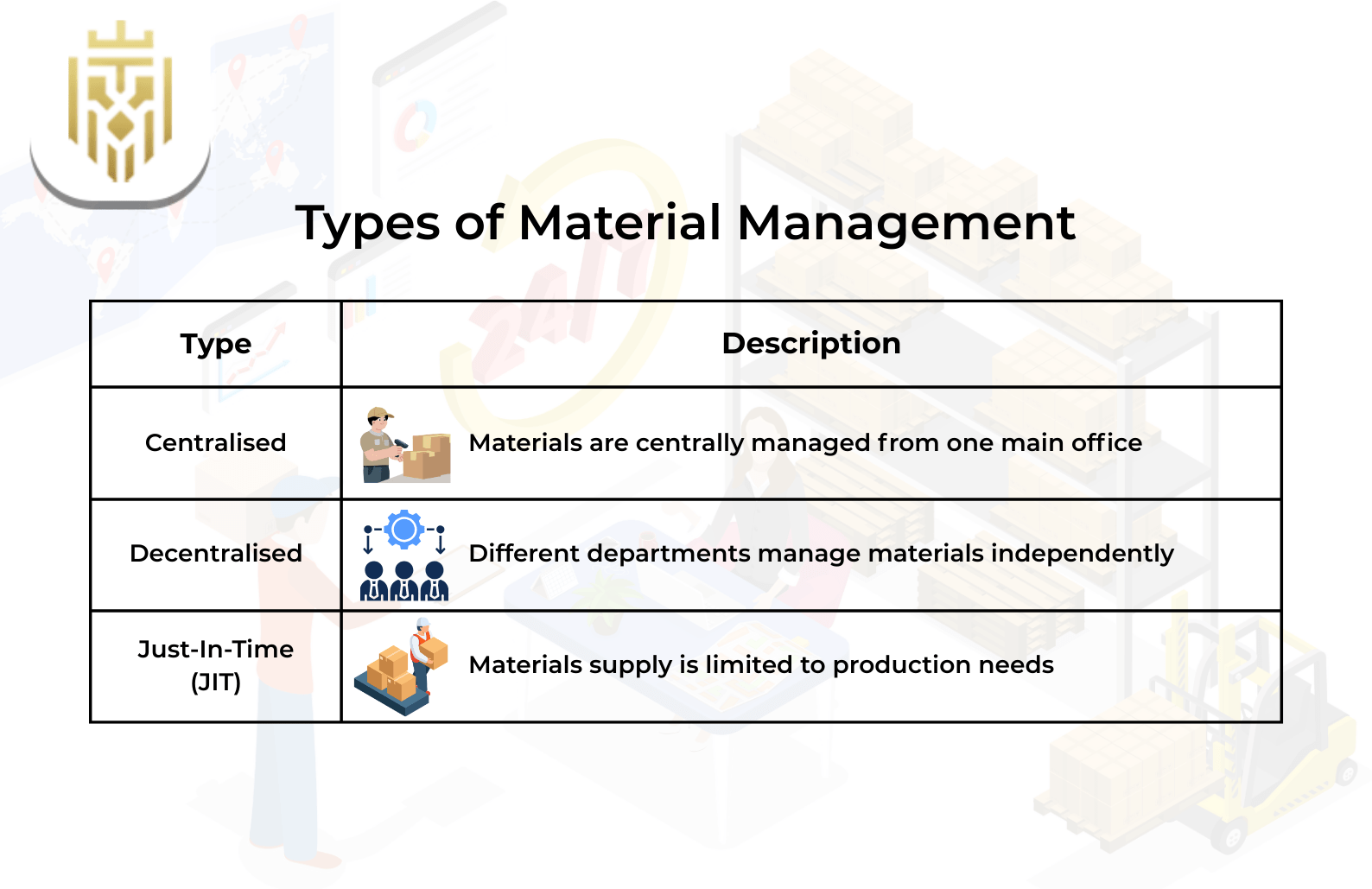
Organizations may employ different strategies to handle materials based on their operational structure and supply chain needs.
Centralised Material Management
In a centralized system, all activities related to materials such as buying, storing, and controlling inventory are carried out by one department or at one location. This strategy facilitates the inventory control and helps cut down the purchasing activity duplication.
Decentralised Material Management
In a decentralized system, individual departments or locations only manage their respective material buying and inventory control. This operating style allows more freedom and quicker decision-making, mainly in very big organizations with several branches or production units.
Just-In-Time (JIT) Material Management
The Just-In-Time method aims at receiving materials only at the time of production. This way, the company saves on inventory storage and minimizes wastages. However, for this system to work perfectly, the company needs to have suppliers that are very dependable and logistics that are efficient in making deliveries on time.
Material Management Process
The whole material management process generally follows the various phases of the production cycle and the major goal of the material management function is to ensure the availability of materials, their proper storage and their optimum utilization.
Material Planning
The basis for material planning is to define the quantity and quality of materials needed for production. Typically, it relies on forecasted demand, production plans, and past consumption records.
Purchasing
During this stage, you choose suppliers, agree on prices, and make orders for necessary materials. Well-planned purchasing initiatives enable companies to get materials at good prices.
Receiving and Inspection
When the materials are received, the first step is to examine their quality, quantity, and whether they meet the specifications. This step is crucial so that the defective or wrong materials are caught before the production.
Storage and Warehousing
Materials are kept in warehouses or storage facilities after inspection. The adoption of proper storage ways prevents materials from getting damaged, stolen, or affected by environmental conditions.
Inventory Control
Inventory control means tracking the quantity of goods on hand to make sure materials are available when required. Some methods like ABC analysis, safety stock, and reorder point systems are often used.
Material Handling
Material handling is about moving, protecting, and storing materials inside a warehouse or production facility. Proper handling minimizes damages and enhances efficiency.
Issuing Materials
At last, materials are issued from the warehouse to the production or operational departments. Complete and correct paperwork supports the proper tracking and accountability of materials.
FAQ
1) What is material management?
Material management involves planning, sourcing, storage, and control of materials that facilitate production or other business operations. It aims to make sure that the correct materials are delivered at the right time, in the right quantity, and at the right cost.
2) What are the key stages of material management?
The key stages in the material management process are material planning, material purchase, material receiving and inspection, material storage and warehousing, inventory control, material handling, and material issuing.
3) What are the different types of material management?
Material management types include centralized material management, decentralized material management, and Just-In-Time (JIT) material management.
4) What are the benefits of material management?
The main advantages are better inventory control, lower operational costs, less material wastage, improved planning and forecasting, and higher productivity.