Differences Between FCL and LCL
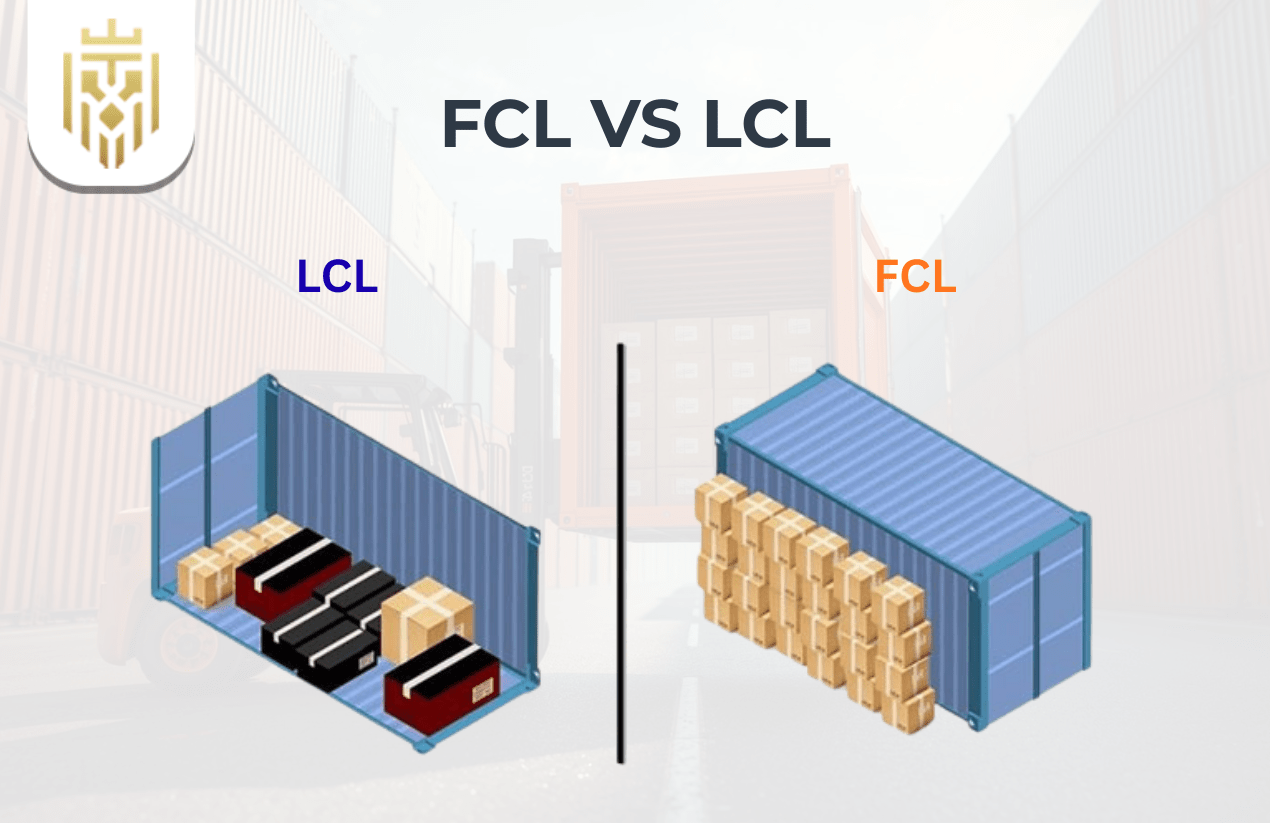
On a high level, the distinction between FCL and LCL shipping is on the usage of containers. FCL shipping involves a single shipper occupying a whole container with his or her cargo. LCL shipping implies that there are several shippers in the same container.
The two are common in container shipping and freight forwarding, though they are used in different sizes and cost frameworks as well as priority of delivery. Using an inappropriate approach will hike freight price, cause delays, or expose cargo to unwarranted risks associated with handling.
What Is FCL Shipping?
FCL (Full Container Load) shipping involves a system in which an individual shipper fills a complete container despite it being full on its own or half-full. This is a container that is closed at the place of origin and is not to be opened until it gets to the last destination. FCL shipping is usually applied to large shipments, shipments of high value or time-sensitive shipments in ocean transportation.
How FCL Shipping Works
- The shipper books a full container (20 ft, 40 ft, or 40 ft HC).
- Cargo is loaded and sealed at the origin warehouse.
- The container is transported directly to the port.
- It moves through ocean freight without consolidation.
- The container is delivered and unsealed at the destination.
Because there is no cargo sharing, FCL shipping offers better control, speed, and security throughout the transport process.
What Is LCL Shipping?
LCL (Less than Container Load) transportation can be used by companies which do not have enough freight to occupy a full container. Rather, the shipments of several shippers are carried together in one container. LCL shipping is also a favourite among small to medium importers because it is relatively cheap, and they do not have to pay to have empty container space.
How LCL Shipping Works
- Cargo is delivered to a consolidation warehouse.
- Multiple shipments are combined into one container.
- The container is shipped via ocean freight.
- At the destination, cargo is deconsolidated.
- Each shipment is delivered separately.
While LCL shipping is cost-effective for smaller loads, it involves additional handling steps, which may impact transit time and risk.
FCL vs LCL Shipping
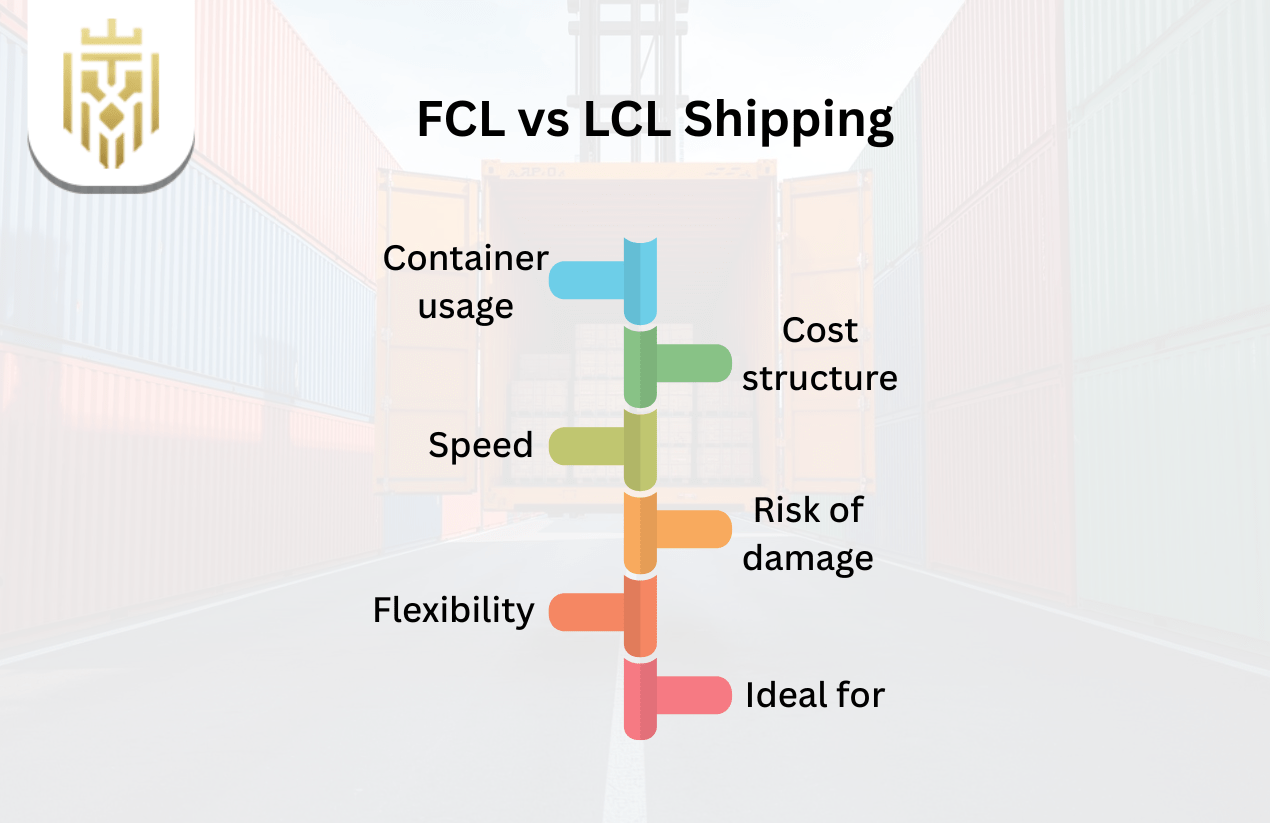
Understanding FCL vs LCL shipping requires a side-by-side comparison of key operational factors that influence logistics decisions.
Container Usage
FCL shipping involves a single shipper who enjoys complete control of cargo placement and handling. This fits best when carrying heavy cargo or delicate products.
Shipping in LCL involves sharing of the container space with other shippers. The grouping and packing of cargo are achieved, and this maximises the use of container; however, more handling is involved in consolidation and de-consolidation.
Cost Structure
FCL shipment freight fees are based on a per-unit container charge, independent of container capacity used up. This will make FCL more cost-effective at greater cargo volumes.
LCL shipping fees are either cargo volume (CBM) or weight charges. Although it does not incur the cost of empty container space, other charges like consolidation, deconsolidation and handling charges are possible.
Speed
FCL shipping is considered to be expedited since the container does not need to be consolidated and sorted as it travels directly to the port of destination.
Taking into account the warehouse handling process, cargo grouping and deconsolidation at the port of delivery, LCL shipping can also take a longer time to get to the destination.
Risk of Damage
Under FCL shipping, there are fewer people to handle the cargo, which lowers the chances of damages or loss. The container is sealed, and it is not opened during the journey.
LCL shipping entails several handling processes, and this minimally affects the risk of damages, particularly in delicate or sensitive goods.
Flexibility
LCL shipping is more flexible for the companies with smaller or irregular quantities of cargo. It helps to make frequent shipments without having to wait to fill a container.
FCL shipping is not flexible with small deliveries but very efficient with regular and large-volume delivery.
Ideal For
FCL Shipping: Large shipments, high-value cargo, tight delivery timelines, fragile goods
LCL Shipping: Small shipments, limited cargo volume, budget-sensitive freight
Factors to Consider When Choosing Between FCL and LCL
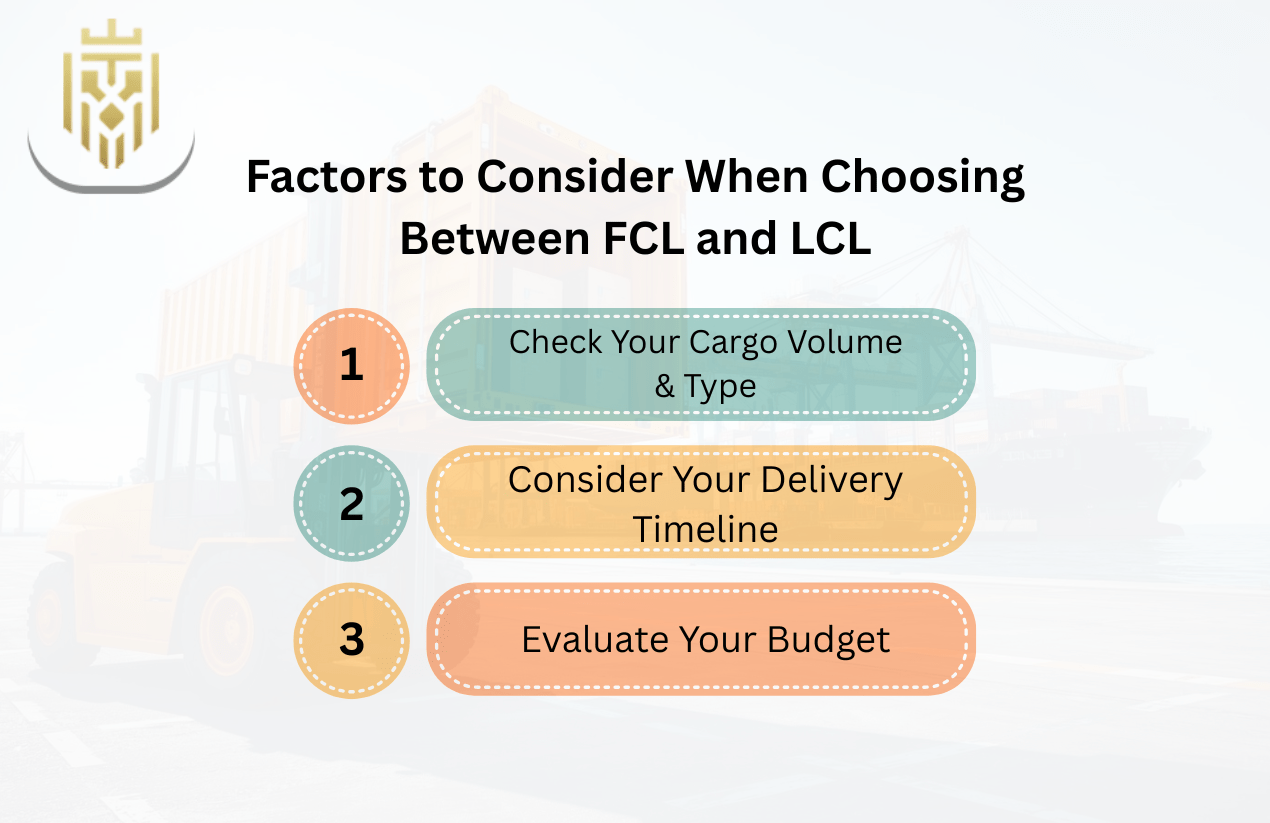
Choosing the right option between FCL vs LCL shipping depends on multiple operational and financial considerations.
Check Your Cargo Volume & Type
The most crucial is the volume of cargo. When your shipment is larger than 70 percent of a container, the FCL shipping will tend to be cheaper.
In the case of low-volume shipment or mixed shipment types, LCL shipping can be an effective alternative when it comes to moving goods without a fully committed container.
Consider Your Delivery Timeline
In case time is of the essence, FCL shipping is the superior option since it has fewer handling procedures and higher transit speeds.
LCL shipping is convenient with the flexibility of the delivery schedule but can be slowed down during in-port and consolidation.
Evaluate Your Budget
LCL shipping seems to be inexpensive in the short run, but it may add handling and service fees that will raise the overall freight expenses.
FCL shipping could be more expensive in the short term, but it frequently produces better value on large shipments with stable logistic needs.
FAQ
1) What Is FCL Shipping?
Full Container Load shipping, or FCL shipping, happens when one shipper occupies a whole container of freight using ocean shipping. It provides quicker transit, reduced rates of damage, and enhanced cargo management.
2) What Is LCL Shipping?
Less than Container Load shipping or LCL shipping is a system whereby various shippers share container space. It is more suitable when carrying smaller cargo volumes and also it is used to lower initial shipping costs.
3) What Is the Difference Between FCL and LCL Shipping?
The primary distinction between the FCL and LCL shipping is the usage of containers and the cost structure. FCL applies a full container to a single shipper, whereas LCL shares space with several shipments which affects speed, cost and handling.
4) How to Choose Between FCL and LCL Shipping?
In order to decide to use FCL or LCL shipping, consider the volume of your cargo, your urgency to deliver, your budget, and your risk tolerance. FCL is suitable when dealing with larger and time sensitive shipments whereas limited-size shipments are better handled by LCL.